27 December 2010

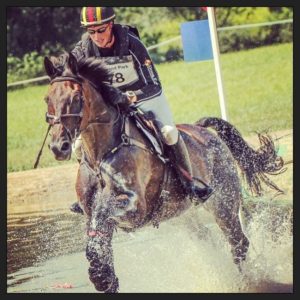
Eventer Doug Payne Competes with Grit, Talent, and Smarts.

photo by Emily Daily

I called eventer Doug Payne early one morning and he returned my call in under two hours.  I love that. I also love that when we set a time to talk he didn’t miss a beat when our temporary 2-hour time difference would mean he’d need to get on the phone at 6:30am.   He said, “That makes it 6:30am. Perfect, I’ll definitely be up by then.” By then. Like it was late or something. Should I have confessed at that point that I thought 6:30am was shockingly early to be doing anything – let along giving an interview? He became my immediate hero. The interview that followed only solidified that view what with stories of shenanigans on horseback with his sister, how he became so good at riding all types of horses, and tips on riding your dressage test from a judge’s-eye-view. And that’s just Part I!

Who was that first magical horse or pony in your life who captured your heart?

photo courtesy of Doug Payne

There wasn’t really one horse. My sister Holly got one horse and it ended up being the one she went to Young Riders with. I grew up riding different horses.  I’m very lucky, I had lots of help but financially, but we didn’t have the money to buy made and going type horses. All the horses were some kind of project you had to see what you could do. Up until I went to college I had a few horses I ended up being successful with and rode through Advanced but not one defining horse that hooked me.  I have a competitive family and my sister had a lot of success early on.  That was difficult for me.  I was always jealous of the fact that she had one horse that was going so well. I rode a lot but not on the same scale. In hindsight it was an advantage because it exposed me to a lot of types of horses.  I found my niche figuring out trickier types and figuring out what makes them tick, then filling in the gaps in their training.

That’s lucky. I had a super horse I did Young Rider’s with but I didn’t have that education with a lot of different horses.

My family is very, very competitive and will make a contest out of anything. Getting stuck second string is beyond frustrating. In hindsight it was a  clear advantage.

What are the skills you developed?

I’m lucky that my mom is as involved as she is. We didn’t have formal lessons other than Pony Club.

photo courtesy of Doug Payne

I had a very active local club with weekly lessons. But day to day we didn’t have regular lessons at 3pm with Mom. She was teaching a lot all the time.  So as you rode by her she’d say you need this or that. Not like a concrete lesson. The skills you learn in order to be successful-you have to ride a bunch of horses. One of the main things I’m most proud of is that I don’t have a particular type of horse; I could ride all types equally well. I’m not stuck to just a thoroughbred or just a warmblood or Irish horse.  Any opportunity you get to ride any type of horse you’re gonna learn something from all of them.  Going through college I didn’t ride a lot; I had one project horse.  After that the best thing I’ve done with my career was to start up a training facility.  Having that barn enabled me to ride a lot more horses.  I ride 12-15 horses a day.  There are so many different types of horses coming you can learn something from each of them.

photo by Emily Daily

If you see the same problem develop in different horses you know it’s your issue not the horse’s. If you rode 2 or 3 horse on a daily basis and suddenly they’re all drifting left or rushing you know this isn’t just this horse. That’s not something an instructor can teach you. If your horse is drifting it’s like, ok fix it. Sometimes it’s the horse’s issue but as you become a better rider you realize it’s never the horse’s problem, it’s all yours.

Tell me about your family’s background in horses.

My Mom rode later in life in her teens in the suburbs of New York and New Jersey. She didn’t have a childhood in horses and wasn’t all that involved with them. She was a scientist first and helped developed Listerine and this kind of thing.  She went full time into horses when we were born.  She has a lesson and training facility and farm that we lived on and they still live there today.  There were always horses and people coming in for lessons.  Growing up everybody rode and competed and that seemed like a normal thing for us.  We always had a pony around but there was no pressure to compete and go out and practice; it was always our choice, we were never forced to do one thing or another.  I would rather go jump in a field – dressage was not high on my priority list. My whole family was competitive and my sister rode also. She became more involved and started doing better earlier on. The fact that I was losing made me put more effort into flatwork. Both of us got our [Pony Club] A’s and did Young Riders. When we were growing up we always had one horse at a time but when we were 18 and went off to college we had to sell what we had and anything horse-related was our deal.  We got no financial help. It was difficult to swallow but in the end it’s a good thing.  You have a real drive.  I was talking with Wiliam Fox-Pitt and he understood-you either ride and do well or you’re not making rent.  It’s a motivating factor to make it on your own.  You have to figure out how to do it. Business-wise you gotta stay afloat. Find your niche and run with it.

photo courtesy of Doug Payne

Tell us more about how you and your sister were competitive?

My sister and I used to get home from school and race from the door of the house to see who could be tacked up and on their horse first or, if we were out riding, anything from jumping contests, doing tricky lines, a long spot contest, short spot contest, and whatever you can think of it.  If you can make it into a game one of us would lose at it.

photo courtesy of Doug Payne

We also skiied a fair amount.  The entire family did. Both of us also played all sorts of sports. We pretty much tried anything.  Through Pony Club we did Tetrathlon: running, shooting, riding, swimming.  I ski-raced in college and that was really fun too.

Your mother is a USEF “S” Dressage judge, an FEI eventing judge including at the 2008 Olympics and the WEGs. You are a USEF and eventing judge as well as a USEA level III instructor.  Do you find this experience gives you a special edge over other competitors?

Without a doubt.  That’s one of the main reasons I went into the judging program.  You meet a lot of people right off the bat. I was 26.  It’s becoming less of a problem now but in my early to mid 20′s not that many poeple have a stand-alone business.  I felt at the time that I was losing horses through a perceived lack of experience.  [Becoming a judge helps with] networking and helps cometitively minimize point loss.  You know what the lesser faults are. If the horse is going to break or do something you know how to salvage it.  It’s a huge motivating factor validating what you’re doing and people feel more secure that you know what you’re talking about.  People come out of [a dressage] test saying I don’t know what the judges are thinking.   You might have basic faults you don’t realize.  Obedience and gait first!

photo by Shannon Brinkman

All riders could benefit going through the program.   You don’t have to become a judge; you can audit and learn all the same stuff.

Any inside tips for dressage tests from a judge’s perspective?

Many people are too conservative.  If your horse is a little hot or nervous everyone tends to back off.  It’s like sitting on a time bomb that’s waiting to explode. Be more confident and ride them forward.  You will always be rewarded for a forward ride. Don’t run them off their feet, that’s not what you’re looking for. If you sit and watch a Training division or a Preliminary division-nobody goes for it. People tend to be too conservative.  You could be getting 5 or 10 points higher.  Be more confident and go for it.

What about salvaging problems? Are there tricks to sneaking in fixes?

When your back is to the judge there are spots in test or ring they’ll miss things.  You can make quick fix. But when you’re crossing the center line you better have your horse stretching and soft. Generally if your back is too them and in between movements and you’re not on center line.  It’s depends on the test you’re doing.

Some people might thing it sounds swanky to spend your life outside and NOT in a cubicle.  But it’s hard. What are the key components of running your business that some might not think about when they imagine you riding on a pretty, sunny day.

There’s a lot to it, right. My school background is in engineering.  I had roommates who were computer guys.   They started doing my website then and I do it now.  I can update it quickly and change it around.   It’s time consuming.  It takes a ton of time and some would say to a fault I’m a little bit obsessive about thinking ‘what can I do next’? The business has been up and running for five years.  I never thought I would be doing this professionally.  I was going to go into forensics and do this on the side.  But I was making what I would be making as a starting police officer. All of my horses that were hobby dollars were now business dollars.  I thought, if I can afford this then I can go back to engineering later.

photo by Emily Daily

Early on I tried to get this all going as training operation. I wanted to be riding.  A ton of horses are short term, almost like boot camp, for 1-3 months. The first couple of years I rode horses who reared, bucked, spun, anything you could think of.  But no one wants to ride problems all the time.  It was a great foot in the door so I could make a go of it and make a living off of it.  There were a few that would come through door that ended up being great. That horse, Running Order, wasn’t working out in the jumping world but it wasn’t too long to get him straightened out.

photo by Emily Daily

You get one good one and it starts to snowball.  Now I have a core group of good horses who are 3 or 4 year-olds and clean slates. Everything else had some issue that ended up turning into something a bit nicer. I’m riding more and more good quality ones that don’t have some problem. Day-to-day it’s  time consuming.  I’m riding 7:30am-4:30pm straight through and have 2-3 people all the time working.  I teach only a few lessons a week.  I spend 2 or 3 hours a day on inquiries that come in, advice, scheduling lessons.

The biggest push now is social networking with facebook and new content with pictures and videos. Everybody loves content. If you can keep getting stuff up and running it really helps.

Check back for Part II of Doug Payne’s interview and find out about his string of horses, key PR tips for anyone in, on, or around the horse business, and how riding across discipline can make you a better equestrian.


Related Posts with Thumbnails
By Courtney in Rider Interviews | 1 Comment
Tags:

One Comment on “Eventer Doug Payne Competes with Grit, Talent, and Smarts.”

  1. This is a great interview about an exceptional rider and professional. Kudos to his parents who instllled such important values as self reliance and hard work.


Leave a Comment

Spam Protection by WP-SpamFree